
When your technicians are working on an electrical installation, every detail matters.
Utilizing digital resources, like a job checklist or electrical invoice template, can help streamline your day-to-day operations and ensure consistency.
When it comes to getting paid, there’s no room for mistakes that can damage your revenue, especially if profit margins are already thin.
Creating accurate and professional invoices in a matter of moments that customers can pay on-site will improve loyalty, cash flow, and save your technicians valuable time in the field.

What’s an Electrical Invoice?
An electrical invoice serves as a detailed record of the services rendered by your field service team. It outlines the tasks completed, materials used, labor hours invested, and the overall cost of the services provided.
This document acts as a formal request for payment and gives clients a clear breakdown of the charges associated with the job they requested.
A well-constructed invoice reflects professionalism and instills trust and transparency between the service provider and the client.
Without one, you could have a difficult time creating loyal customers and driving repeat business.
Why You Need Electrical Invoice Templates
Before upending your entire process, It’s important to understand why accurate invoicing can make a massive difference to your business.
Beyond ensuring timely payments, detailed electrical invoices contribute to your positive reputation and are an effective way to close out the customer journey.
If any of the challenges listed below sound familiar, you may need to think about changing something in your invoicing process:
- Manual data entry errors
- Inconsistent pricing
- Lost physical invoices
- Technician communication
- Lack of documentation
- Payment tracking
- Delayed payments
- Client disputes
- Inefficient project management
- Missed revenue opportunities
What to Include in an Electrical Invoice Template
Here’s a comprehensive list of what should be included in every electrical invoice template so you impress customers, accelerate cashflow, and improve your record-keeping:
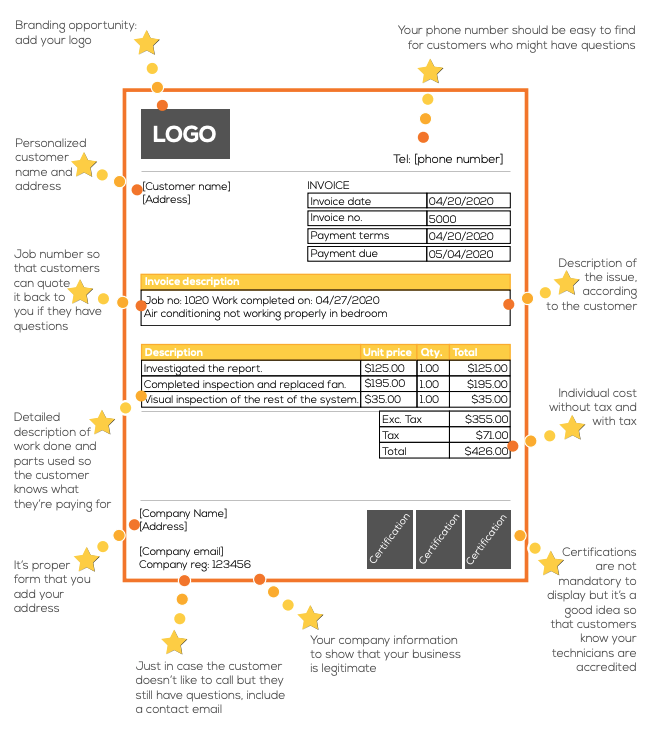
- Headings: At the top, prominently display your business name, logo, address, phone number, and email address. This information offers clients a quick way to contact you for any questions or clarifications.
- Customer details: Clearly state your client’s name, address, and contact details. Accuracy prevents confusion about the recipient of the invoice and establishes a professional rapport. They’ll automatically be transferred from your customer database to the invoice too, but If your technician needs to reference the customer info, they’ll be happy to have it in multiple places.
- Date & unique invoice numbers: Assign a distinct invoice number and indicate the date it was issued. This unique identifier helps streamline your payment processes and allows for a quick search if the client has questions after you send the invoice.
- Itemization of services rendered: A well-structured breakdown enables clients to understand the scope of work. You should consider including photos that showcase completed tasks, offering visual clarity and reinforcing the value of your electrical services.
- Breakdown of materials, labor, & other costs: Don’t forget to outline the costs associated with materials, labor, and other job costs like local sales taxes. This means clients can identify the individual components contributing to the total amount.
- Payment terms, methods, and due dates: Last but not least, specify the accepted payment methods, due date, and communicate the terms and conditions. If you provided a discount or have policies for late payments, this is the place to explain them clearly.
Check out the image below to see an example of an electrical invoice template
Seven Benefits of Using an Electrical Invoice Template
Having a well-designed electrical invoice template will keep your team consistent and prevent invoicing mistakes. There’s many different benefits to using a template, but we’ve focused on seven of the most significant:
1. Automated Data Entry
Accurate invoicing means meticulous data entry in the office or field and that begins with an efficient system.
With technology driving the standard, this usually involves using electrical contractor software with features that help you eliminate manual errors and fully automate the payment process.
2. Improved Communication Between Departments
Communication breakdowns between technicians and the administration team can lead to discrepancies in your accounting systems.
Establishing clear channels for communication ensures that the information about services rendered, inventory used, and any additional charges are accurately conveyed.
Field service inventory management software supports your entire team in staying on top of parts.
Further, regular meetings and a collaborative digital platform can bridge communication gaps and create a seamless flow of information, reducing the likelihood of mistakes.
3. Consistent Pricing and Labor Rates
Standardizing your pricing structure is a proactive measure to prevent inconsistencies.
Confirm all team members are aware of the established rates, and that they’re consistently applied across all invoices.
This not only simplifies the invoicing process but also fosters transparency with clients, lowering the risk of disputes related to pricing discrepancies.
4. Implements a Verification Process
Even if your invoicing is automated, a multi-step review process acts as a safety net, catching potential errors before invoices reach clients.
Designate specific team members to review different aspects of the invoice, such as services provided, quantities, and pricing.
A collaborative approach minimizes the chances of overlooking errors and makes sure that the final invoice is accurate and comprehensive.
This step also allows you to review the details and check they adhere to the company standards. A final verification can catch any oversights and provide the opportunity to address them prior to the client seeing the invoice.
5. Detailed Documents and Job Reports
Thorough documentation is the backbone of accurate invoicing, protecting your bottom line. Stipulate that your technicians to maintain detailed records of services provided, incorporating materials used and hours worked.
This serves as a reference point during the invoicing process, so that all billable items are correctly accounted for, and clients are billed for the services they received.
This process becomes much easier when you have technology like fleet management software in place that tracks your employees and their hours in real-time.
6. Trains New Employees on Best Practices
Regardless of whether it’s your office, field service, or warehouse team, ongoing training is required to instill best practices across your company.
Ensuring that team members are well-versed in the invoicing process, understand the pricing structure, and are aware of the importance of clear communication will keep everything running smoothly.
Regular training sessions keep your team updated and ready to handle any scenario.
7. Increased Customer Feedback and Reviews
Your clients are the most valuable resources for feedback. Actively seek input from them regarding the invoicing process – understand their expectations and use it to identify areas for improvement.
This customer-first approach not only provides a hassle-free invoicing process but also strengthens your client relationships, fostering long-term satisfaction and loyalty.
When you use an electrical invoice template or customer self-service portal for invoicing, you can easily offer a place or link for them to leave a review at the end of the job.
Using Commusoft for Streamlined Invoicing
An effective way to streamline your invoicing process is by having an electrical invoice template ready for every possible scenario.
Investing in reliable software, like Commusoft, automates the invoicing process and reduces the risk of errors associated with manual systems.
Timely, accurate invoices contribute to a healthy cash flow and strengthen client relationships. Spend the time and resources needed to optimize your invoicing process and watch your business thrive.



 English (United States)
  English (UK)